Reset Handshake
When a warm or hot reset occurs, the PCIe Controller sends a reset request by
driving the RESET_REQ output high. When RESET_REQ goes high,
the user application can delay the assertion of RESET_ACK, for example, to
provide sufficient time to power down the application. However, the user application must
indicate its readiness for reset by asserting RESET_REQ, which tells the PCIe Controller to proceed with the warm or hot reset.
Once the reset event is served, the PCIe Controller de-asserts
RESET_REQ, at which point the user application must deassert
RESET_ACK.
De-asserting PERST_N triggers the PCIe Controller's internal
sequence to exit from reset and subsequently perform PCIe training and link up.
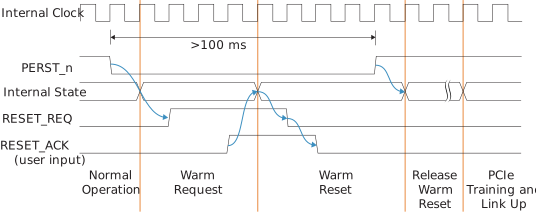
RESET_REQ is asserted, the reset request is sent to all affected
IP cores (including soft IP) and the core fabric. - When the soft IP receives the reset request, it should evaluate its readiness and
assert
RESET_ACK. - The user appliication should hold
RESET_ACKasserted until the PCIe Controller de-assertsRESET_REQ. - When
RESET_REQdeasserts, the user application should deassertRESET_ACK.
When all affected soft IP cores assert RESET_ACK, the actual reset
event occurs and the affected reset domains are reset.