L1.2 Operation
The following figure illustrates the sequence for the L1 PM substates state machine to enter the L1.2 substate.
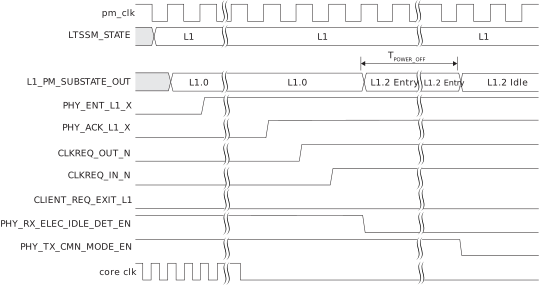
If the entry conditions for L1.2 are satisfied, it first performs the handshake with the PHY
using the PHY_ENT_L1_X and PHY_ACK_L1_X signals to prepare
the PHY for the removal of the reference clock. Once the PHY has asserted
PHY_ACK_L1_X, the PCIe Controller de-asserts
CLKREQ_OUT_N. If the link partner also de-asserts its
CLKREQ# output, the core clock becomes inactive and the PCIe Controller's CLKREQ_IN_N input is de-asserted. The L1 PM
substates state machine transitions to L1.2.Entry when the CLKREQ_IN_N input
goes high. While the L1 PM substates state machine is in the L1.2.Entry substate, it monitors
the CLKREQ_IN_N input and transitions back to L1.0 if it is asserted. If
CLKREQ_IN_N remains de-asserted, the state machine stays in the L1.2.Entry
substate for an interval TPOWER_OFF (2 ms) and then transitions to L1.2.Idle.
When the L1 PM substates state machine is in L1.2.Idle, the client or the link partner
can initiate a transition of the link out of the L1-substate. The following figure shows the
operation of the L1.2 substates when there is an exit trigger from the client.
CLIENT_REQ_EXIT_L1 represents all local exit triggers.
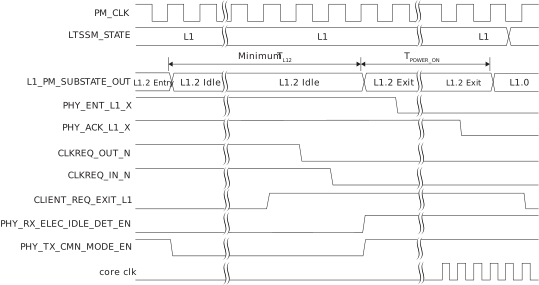
Any one of the local exit triggers initiates the L1.2 exit process. The PCIe Controller first asserts CLKREQ_OUT_N to turn on the core
clock, resulting in CLKREQ_IN_N becoming asserted. When
CLKREQ_IN_N goes low, the L1 PM substates state machine transitions to
L1.2.Exit.
While in L1.2.Exit, the L1 PM substates state machine performs the
PHY_ENT_L1_X/ PHY_ACK_L1_X handshake with the PHY to
prepare the PHY for the re-introduction of the clocks, and subsequently transitions back to
L1.0. The L1 PM substates state machine must stay in L1.2.Exit for a minimum interval of
TPOWER_ON. The duration of this interval is determined by the setting of the
TPOWER_ON value and scale parameters in the L1 PM Substates Control 2 Register.
The interval can vary from 0 to 3,100 ms.
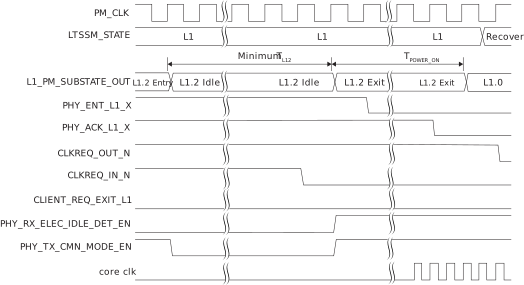
The previous figure illustrates the operation when the link partner initiates the exit
from L1. When in L1.2.Idle, the link partner initiates the transition of the link from L1 by
asserting its CLKREQ# output, resulting in the assertion of the PCIe Controller's CLKREQ_IN_N input. When
CLKREQ_IN_N goes low, the L1 PM substates state machine transitions to
L1.2.Exit (after satisfying the minimum 4 μs stay in L1.2.Idle). After completing the
handshake with the PHY for re-enabling its clocks and staying in L1.2.Exit for a minimum
interval of TPOWER_ON, the L1 PM substates state machine then transitions to
L1.0.