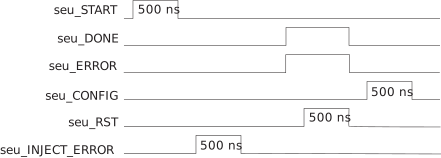
SEU Detection Circuitry
Your user logic connects to the SEU detection circuitry using the following pins.
| GUI Option | Default Signal Name | Direction | Description |
|---|---|---|---|
| SEU Start Detection Pin Name | seu_START | Input | Manual mode only. To use this pin to initiate an SEU check, pulse this signal high for a minimum pulse of 500 ns. |
| Error Injection Pin Name | seu_INJECT_ERROR | Input | This signal forces an SEU error so you can test the how the SEU
detection circuitry interacts with your user design during testing
and development. To inject an error, pulse this signal high for a
minimum pulse of 500 ns. Pull this signal low when you are not
using it. |
| Error Reset Pin Name | seu_RST | Input | This pin sets the Error Status pin to low to clear the error and restart SEU detection monitoring. To reset SEU monitoring, pulse this signal high for a minimum pulse of 500 ns. |
| Error Status Pin Name | seu_ERROR | Output | If the FPGA detects an SEU, this signal goes high. It does not go low until you toggle the Error Reset pin. |
| Reconfiguration Pin Name | seu_CONFIG | Input | If the FPGA is using active configuration
mode, you can use this pin to trigger the FPGA to reconfigure; the FPGA does not
automatically reconfigure when an error is detected. Pulse this
signal high for a minimum pulse width of 500 ns. If you are
using passive configuration mode or JTAG configuration, you
cannot trigger reconfiguration with this signal. |
| SEU Done Detection Pin Name | seu_DONE | Output | This signal goes high when the SEU detection circuitry has completed calculating the CRC and comparing it to the stored one. If an SEU occurred, this signal stays high until you reset the circuitry. |