TX AXI ST 64
At the TX AXI ST interface, transmission starts when TX_AXI_TREADY =
1. The assertion of TX_AXI_TREADY indicates that
the core is ready to accept the TX data streaming.
To transmit, assert TX_AXI_TVALID, along with
TX_AXI_TDATA, TX_AXI_TKEEP,
TX_AXI_TLAST, TX_AXI_TUSER.
TX_AXI_TDATA contains 64-bit data streaming to be transmitted to
XGMII_TXD. TX_AXI_TLAST indicates the last byte of
data in the data stream. TX_AXI_TKEEP indicates the positional validity
of the byte data within the data streaming. The assertion of
TX_AXI_TUSER indicates an error in the data streaming.
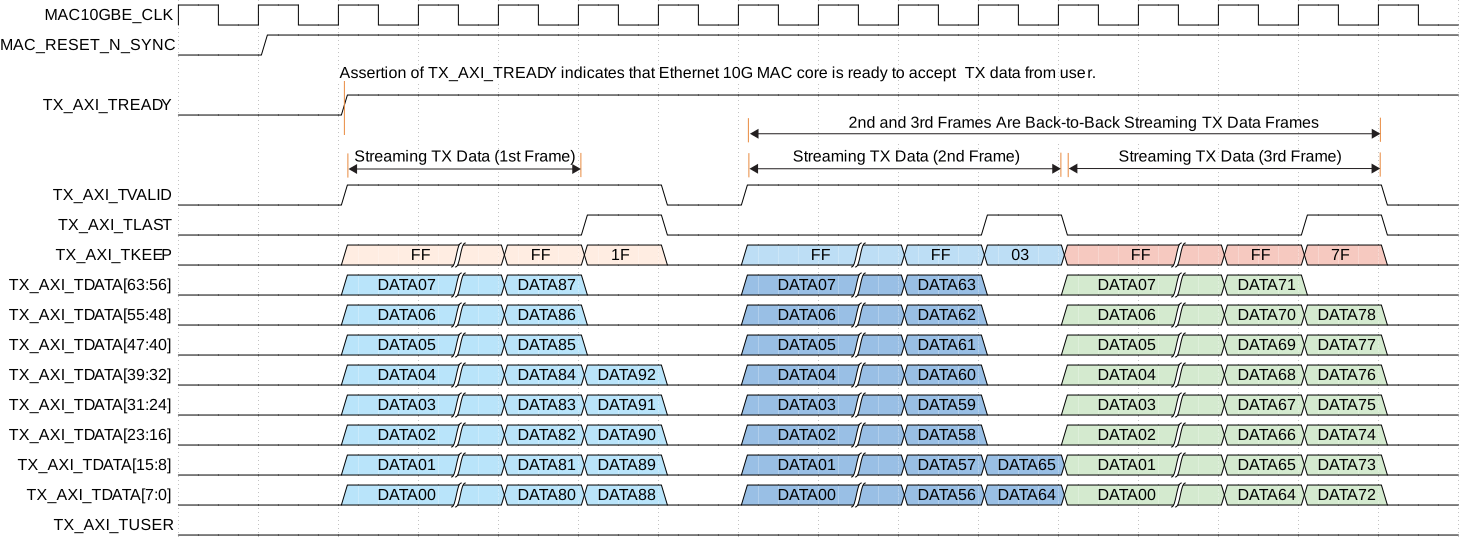
For Ethernet applications, TX_AXI_TDATA must contain streaming data,
i.e., data needs to be streaming and continuous, where TX_AXI_TKEEP =
FF except at TX_AXI_TLAST. Streaming data, at
TX_AXI_TLAST, means TX_AXI_TKEEP = {01,
03, 07, 0F, 1F, 3F, 7F, FF}. Refer to Figure 1.
If the data is not continuous, it is interpreted as a bad frame and is dropped. The same
goes with TX_AXI_TUSER, i.e., the asserted
TX_AXI_TUSER results in a bad frame. Refer to Terminating Bad TX Frames.
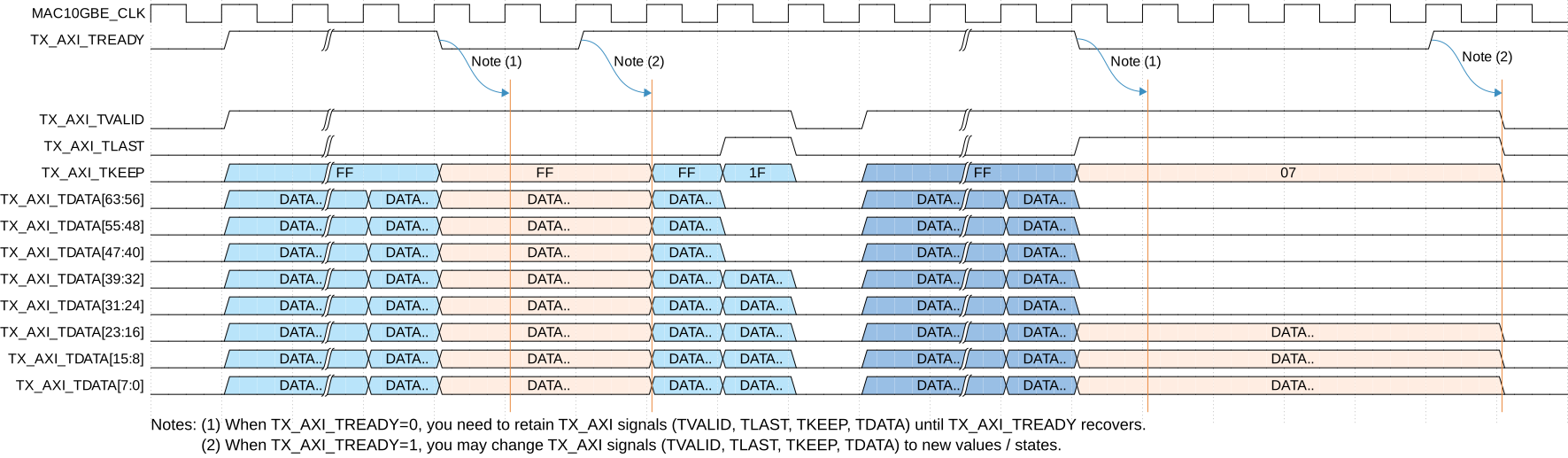
When TX_AXI_TREADY = 0, the core is not ready to accept any TX data. Hence, you need to
hold or retain all the current TX_AXI signals, which are
TX_AXI_TDATA, TX_AXI_TLAST,
TX_AXI_TVALID, TX_AXI_TKEEP, and
TX_AXI_TUSER, until TX_AXI_TREADY recovers to
1. Refer to Figure 2.
When TX_AXI_TREADY = 1, the core effectively decodes when TX_AXI_TVALID
is asserted. When TX_AXI_TVALID = 0, the entire column
of TX_AXI signals (TDATA, TKEEP, TLAST, TUSER) is deemed as invalid.
Refer to Figure 3.
TX_AXI_TVALID =
0
mac10gbe_clk domain. You need to ensure that the
TX_AXI_TVALID, TX_AXI_TDATA,
TX_AXI_TKEEP, TX_AXI_TLAST, and
TX_AXI_TUSER signals are registered and synchronous to
mac10gbe_clk prior to entering the
core.