Create an LVDS RX Interface with PHY Clock
About this task
The following figure shows a completed LVDS RX interface, where n is the deserialization width and m is the number of RX lanes.
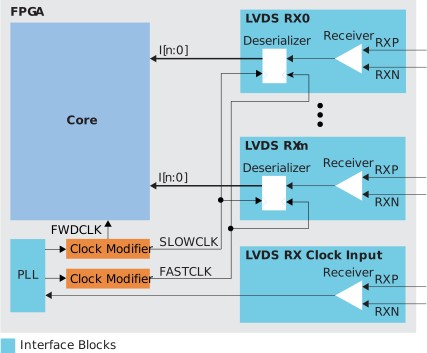
Follow these steps to build an LVDS RX interface using the Efinity® Interface Designer.
Procedure
-
Add an LVDS / SLVS RX block to act as the PLL reference clock input:
Option Description LVDS Type Receiver (RX) LVDS Resource Choose a valid resource.Connection Type pll_clkin Input Pin/Bus Name Use the clock LVDS RX clock output name as the incoming clock. -
Add a PLL block with the following settings:
Option Description Resource Choose a PLL resource.Reference Clock Mode External Reference Clock Frequency Set the reference clock frequency to match the clock coming from the LVDS RX reference clock you created in step 1. Output Clock For LVDS deserializer widths 2 - 10, define the output clocks so that you have one for the fast clock (serial) and one for the slow clock (parallel). Set the relationship between the clocks as serial clock frequency = parallel clock frequency * (deserialization / 2) (half rate) or serial clock frequency = parallel clock * deserialization (full rate). The serial clock pahase shift should be between 45 and 135 degrees. -
Add an LVDS RX block with these settings:
Option Description LVDS Type Receiver (RX) LVDS Resource Any channel Enable Deserialization On Deserialization Width n Half Rate If using half-rate serialization, turn on Enable Half-Rate Serialization. Output Pin/Bus Name Any Serial Clock Pin Name Use the fast clock output name that corresponds to the PLL you chose. Parallel Clock Pin Name Use the slow clock output name that corresponds to the PLL you chose. - Repeat step 3 for each LVDS RX data lane you want to implement.