XGMII TX
- Faulty link condition
- Pause mechanism from the RX pause frame
- Request to send TX pause frame
TX_AXI_TVALID,TX_AXI_TLAST,TX_AXI_TKEEP,TX_AXI_TDATA, andTX_AXI_TUSER.
TX_AXI_TDATA directly into
XGMII_TXD. Hence, TX_AXI_TDATA must start with
header information, i.e., destination address, source destination, Ethernet length or
type, and/or VLAN tags. TX_AXI_TDATA, the header octets are labeled
DATA to illustrate the conversion between the TX AXI interface
and the XGMII TX.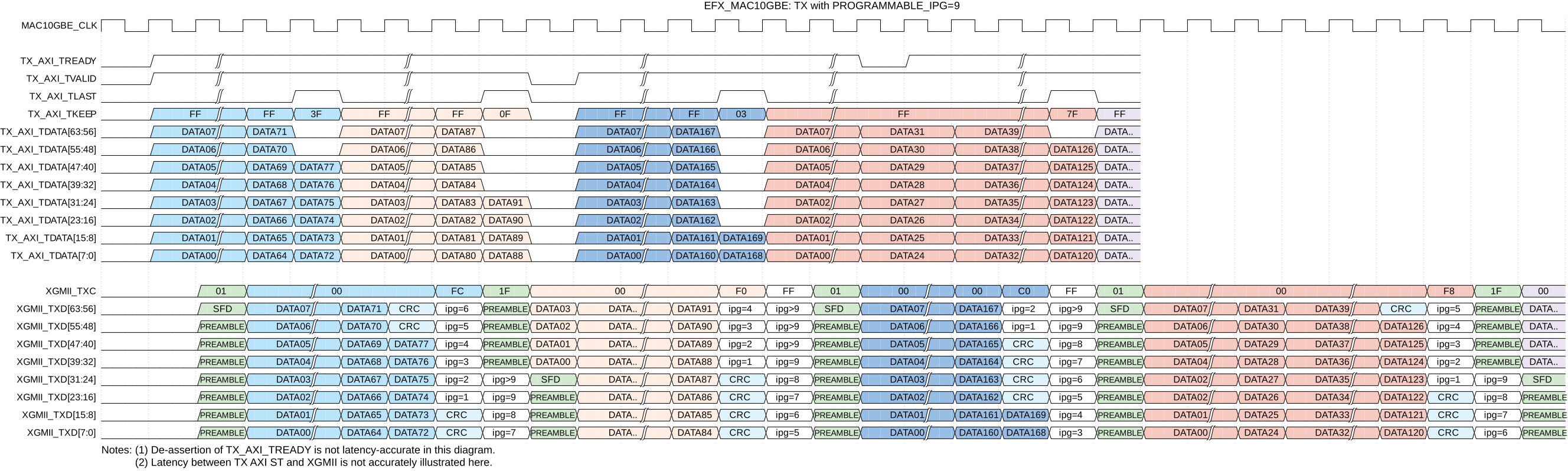
Priority flow control takes 2nd and 3rd priority, while a faulty link condition has the highest priority. Whenever a higher-priority event arrives at the TX channel, it needs to wait for the ongoing transfer to complete before the higher-priority event takes effect. Details of priority handling are described in Priority Flow Control (Duplex Mode) and Link Fault Sequence.
Based on the user defined Programmable Inter Packet Gap, XGMII TX also inserts the minimum inter packet gap (IPG) between data frames and/or TX pause frames. However, faulty link condition and RX pause mechanism start at Octet 0 without the minimum IPG.
Refer to Figure 1, Figure 2, Figure 1, Figure 1, and Figure 2 for more details on the priority handling and IPG insertion at XGMII TX.