AN 067: Migrating Titanium and Topaz Designs in N484 Packages
Introduction
Commonly, larger FPGAs are used during the development process, while smaller FPGAs are used in production. Larger FPGAs offer more logic elements, memory blocks, and DSP blocks, enabling designers to implement additional features and integrate debugging tools. However, tools such as Virtual I/O (VIO) and Logic Analyzer (LA) may not fit into the final, smaller FPGA. Once the design is finalized and optimized, it can be transferred to a smaller FPGA containing only the necessary resources. This approach reduces production costs, as smaller FPGA are more affordable and consume less power. Reduced power consumption is essential for cost-sensitive and power-sensitive applications, such as IoT devices and portable electronics. This application note describes how to migrate your design from a Ti375, Ti240, Ti165, Tz325, or Tz200 in an N484 package (herein referred to as a "larger N484 FPGA"), which is commonly used for development purposes, to a smaller N484 production FPGA, such as the Ti135, Ti85, Tz100, or Tz75 (herein referred to as a "smaller N484 FPGA").
Migratable Resources
| Resource | Larger N484 FPGA | Smaller N484 FPGA | Compatible Resources | |
|---|---|---|---|---|
| Single-Ended GPIO | HVIO VCMOS: 1.8, 2.5, 3.0, 3.3 V LVTTL: 3.0, 3.3 V |
20 | 21 | 20 |
| HSIO LVCMOS: 1.2, 1.5, 1.8 V HSTL and SSTL (Output): 1.2, 1.35,
1.5, 1.8 V |
85 | 85 | 85 | |
| HSIO HSTL and SSTL (Input and Bidirectional): 1.2, 1.35, 1.5, 1.8
V |
85 | 85 | 16 | |
| Differential GPIO | HSIO (LVDS, RSDS, mini-LVDS, Sub-LVDS, SLVS) | 42 | 42 | 42 |
| HSIO Differential HSTL and SSTL (Output): 1.2, 1.35, 1.5, 1.8 V |
85 | 85 | 85 | |
| HSIO Differential HSTL and SSTL (Input and Bidirectional): 1.2, 1.35, 1.5,
1.8 V |
85 | 85 | 16 | |
| MIPI D-PHY RX Lane | MIPI D-PHY Data Lanes | 28 | 34 | 18 |
| MIPI D-PHY Clock Lanes | 7 | 7 | 4 | |
| MIPI D-PHY Hard Block | RX | 1 | 1 | 1 |
| TX or SSC PLL | 1 | 1 | 1 | |
| LPDDR4 PHY with Memory Controller | x32 DQ width | 1 | 1 | 1 |
| Global Clock or Control Signals from GPIO Pins (GCLK) | 17 | 24 | 14 | |
| Fractional PLLs | PLL | 9 | 8 | 8 |
| Reference Clock from GPIO pins (PLL_CLKIN) | 12 | 13 | 9 | |
| External Feedback I/O (PLL_EXTFB) | 6 | 5 | 3 | |
| Transceiver | PCIe (Titanium FPGAs) | 1xGen4 | 1xGen4 | 1xGen4 |
| PCIe (Topaz FPGAs) | 1xGen3 | 1xGen3 | 1xGen3 | |
| SGMII, 10GBase-KR, or PMA Direct | Up to 2 | Up to 2 | Up to 2 | |
| Hardened RISC-V | 1 | 1 | 1 | |
Incompatible Pin Functions
There is a mismatch in the pin functions between larger N484
FPGAs and smaller N484
FPGAs, as detailed in the table below. Please observe appropriate
migration strategies for this pin to avoid hardware conflicts. If the board design needs
to be compatible between both larger and smaller N484
FPGAs, the H5 package pin should be treated as reference resistor
(REF_RES) pin.
| Package Pin | Larger N484 FPGA | Smaller N484 FPGA | Instruction |
|---|---|---|---|
| H5 | REF_RES_4B | GPIOR_132 | Efinix suggests you to preserve this pin for connecting to ground through a 10 kΩ resistor of ±1% as REF_RES during board design if you do not need the extra HVIO resources available in a smaller N484 FPGA. |
REF_RES) pin in a smaller N484
FPGA, Efinix advises you to instantiate
(GPIOR_132) as input with weak pull-low in the Interface Designer
to minimize pin leakage as unused pins will default to weak pull-up.Migration Flow

Early Pin Assignment
When planning for migration from a larger N484 FPGA to a smaller N484 FPGA, pay careful attention to pin compatibility. While the HVIO, MIPI D-PHY, DDR, and transceiver pins are fully compatible, some HSIO pins have functional differences. Therefore, customers should carefully plan pin assignments if they use the HSIO pins for the following:
- I/Os on banks 2B_2C and 4C
- Global clock and control network (GCLK) pins
- PLL clock input (
PLL_CLKIN) and PLL external feedback (PLL_EXTFB) pins - Input HSTL/differential HSTL and SSTL/differential SSTL
- MIPI RX lane
Input/Outputs (I/Os) on Banks 2B_2C and 4C
When using I/Os on banks 2B_2C and 4C in a larger N484 FPGA, verify that the bank voltages remain the same after migration. After migration, the 2B_2C I/Os in the larger N484 FPGA are mapped to 2A and 2B in the smaller N484 FPGA, while the 4C I/Os in the larger N484 FPGA will be mapped to 4A and 4B in the smaller N484 FPGA. Refer to the table below for detailed I/O bank migration mapping.
| Package Pin | Larger N484 FPGA | Smaller N484 FPGA | ||
|---|---|---|---|---|
| Bank Number | Pin Name | Bank Number | Pin Name | |
| T16 | 2B | GPIOT_N_14 | 2A | GPIOT_P_00_CLK26_P |
| T17 | 2C | GPIOT_P_29 | 2A | GPIOT_P_01_CLK27_P |
| R16 | 2C | GPIOT_N_29 | 2A | GPIOT_N_01_CLK27_N |
| N17 | 2C | GPIOT_P_32 | 2A | GPIOT_P_02 |
| N16 | 2C | GPIOT_N_32 | 2A | GPIOT_N_02 |
| T19 | 2C | GPIOT_P_33_CLK16_P | 2B | GPIOT_P_22_CLK16_P |
| R18 | 2C | GPIOT_N_33_CLK16_N | 2B | GPIOT_N_22_CLK16_N |
| R17 | 2C | GPIOT_P_34_CLK17_P | 2A | GPIOT_P_04_CLK31_P |
| P18 | 2C | GPIOT_N_34_CLK17_N | 2A | GPIOT_N_04_CLK31_N |
| F1 | 4C | GPIOB_N_30_CDI8 | 4A | GPIOB_N_22 |
| E1 | 4C | GPIOB_P_30_CDI9_PLLIN0 | 4A | GPIOB_P_22_EXTFB |
| J3 | 4C | GPIOB_N_29_CDI10 | 4B | GPIOB_N_16_CDI8_CLK3_N |
| H3 | 4C | GPIOB_P_29_CDI11_EXTFB | 4B | GPIOB_P_16_CDI9_CLK3_P |
| L4 | 4C | GPIOB_N_26_SSU_N | 4A | GPIOB_N_20_SSU_N_CLK6_N |
| K4 | 4C | GPIOB_P_26_EXTSPICLK | 4A | GPIOB_P_20_EXTSPICLK_CLK6_P |
| H2 | 4C | GPIOB_N_25_CDI12 | 4A | GPIOB_N_18_CLK5_N |
| G2 | 4C | GPIOB_P_25_CDI13 | 4A | GPIOB_P_18_CLK5_P |
| K3 | 4C | GPIOB_N_24_CDI14 | 4B | GPIOB_N_08 |
| K2 | 4C | GPIOB_P_24_CDI15 | 4B | GPIOB_P_08 |
| J1 | 4C | GPIOB_N_23_CBSEL0 | 4A | GPIOB_N_19_CBSEL0 |
| H1 | 4C | GPIOB_P_23_CBSEL1 | 4A | GPIOB_P_19_CBSEL1 |
| M5 | 4C | GPIOB_N_20_CLK7_N | 4B | GPIOB_N_09 |
| L5 | 4C | GPIOB_P_20_CLK7_P | 4B | GPIOB_P_09 |
| L7 | 4C | GPIOB_N_19_TEST_N_CLK6_N | 4A | GPIOB_N_17_TEST_N_CLK4_N |
| L6 | 4C | GPIOB_P_19_NSTATUS_CLK6_P | 4A | GPIOB_P_17_NSTATUS_CLK4_P |
Global Clock and Control Network (GCLK) Pins
Not all GCLK pins in larger N484 FPGAs are compatible those in smaller N484 FPGAs. Of the 17 GCLK pins available in larger N484 FPGAs, only 14 are compatible with the smaller N484 FPGAs. Therefore, your selection of GCLK pins is critical. Refer to the table below for compatible GCLK pins.
| Package Pin | Larger N484 FPGA | Smaller N484 FPGA | ||
|---|---|---|---|---|
| Bank Number | Pin Name | Bank Number | Pin Name | |
| T19 | 2C | GPIOT_P_33_CLK16_P | 2B | GPIOT_P_22_CLK16_P |
| R18 | 2C | GPIOT_N_33_CLK16_N | 2B | GPIOT_N_22_CLK16_N |
| R17 | 2C | GPIOT_P_34_CLK17_P | 2A | GPIOT_P_04_CLK31_P |
| P18 | 2C | GPIOT_N_34_CLK17_N | 2A | GPIOT_N_04_CLK31_N |
| U22 | 2D | GPIOT_P_37_CLK20_P | 2B | GPIOT_P_23_CLK17_P |
| T22 | 2D | GPIOT_N_37_CLK20_N | 2B | GPIOT_N_23_CLK17_N |
| U20 | 2D | GPIOT_P_38_CLK21_P | 2B | GPIOT_P_24_CLK18_P |
| T21 | 2D | GPIOT_N_38_CLK21_N | 2B | GPIOT_N_24_CLK18_N |
| R21 | 2D | GPIOT_P_40_CLK23_P | 2B | GPIOT_P_25_CLK19_P |
| R22 | 2D | GPIOT_N_40_CLK23_N | 2B | GPIOT_N_25_CLK19_N |
| N21 | TR1 | GPIOR_95_CLK12 | TR1 | GPIOR_80_CLK12 |
| N22 | TR1 | GPIOR_96_CLK13 | TR1 | GPIOR_81_CLK13 |
| M8 | BR0 | GPIOR_142_CLK8 | BR0 | GPIOR_127_CLK8 |
| K7 | BR0 | GPIOR_143_CLK9 | BR0 | GPIOR_128_CLK9 |
| A2 | 4B | GPIOB_N_43_CSI_CLK10_N | 4A | GPIOB_N_28_CSI_CLK11_N |
| A3 | 4B | GPIOB_P_43_CSO_CLK10_P | 4A | GPIOB_P_28_CSO_CLK11_P |
| L7 | 4C | GPIOB_N_19_TEST_N_CLK6_N | 4A | GPIOB_N_17_TEST_N_CLK4_N |
| L6 | 4C | GPIOB_P_19_NSTATUS_CLK6_P | 4A | GPIOB_P_17_NSTATUS_CLK4_P |
| M3 | 4D | GPIOB_N_15_CDI16_CLK2_N | 4B | GPIOB_N_15_CDI10_CLK2_N |
| M4 | 4D | GPIOB_P_15_CDI17_CLK2_P | 4B | GPIOB_P_15_CDI11_CLK2_P |
| R4 | 4D | GPIOB_N_14_CDI18_CLK1_N | 4B | GPIOB_N_14_CLK1_N |
| P5 | 4D | GPIOB_P_14_CDI19_CLK1_P | 4B | GPIOB_P_14_CLK1_P |
| L1 | 4D | GPIOB_N_13_CDI20_CLK0_N | 4B | GPIOB_N_13_CLK0_N |
| K1 | 4D | GPIOB_P_13_CDI21_CLK0_P | 4B | GPIOB_P_13_CLK0_P |
PLL_CLKIN and PLL_EXTFB Pin
Migrating the PLL_CLKIN pins is important because most designs require these pins to drive the PLL’s reference clock. Of the 12 PLL_CLKIN pins in larger N484 FPGAs, only nine are compatible with the smaller N484 FPGAs. Refer to the table below for compatible PLL_CLKIN pins.
| Package Pin | Larger N484 FPGA | Smaller N484 FPGA | ||
|---|---|---|---|---|
| Bank Number | Pin Name | Bank Number | Pin Name | |
| M17 | 2D | GPIOT_P_50_PLLIN0 | 2B | GPIOT_P_20_PLLIN0 |
| J17 | 2E | GPIOT_P_59_PLLIN0 | 2C | GPIOT_P_34_PLLIN0 |
| L19 | 2E | GPIOT_P_62_PLLIN0 | 2C | GPIOT_P_37_CDI23_PLLIN0 |
| M20 | TR1 | GPIOR_93_PLLIN1 | TR1 | GPIOR_78_PLLIN1 |
| L8 | BR0 | GPIOR_140_PLLIN1 | BR0 | GPIOR_130_PLLIN1 |
| K6 | BR0 | GPIOR_145_PLLIN1 | BR0 | GPIOR_129_PLLIN1 |
| H9 | BR3 | GPIOR_165_PLLIN1 | BL3 | GPIOL_32_PLLIN1 |
| L2 | 4D | GPIOB_P_07_CDI24_PLLIN0 | 4B | GPIOB_P_06_PLLIN0 |
| R3 | 4D | GPIOB_P_03_PLLIN0 | 4B | GPIOB_P_03_PLLIN0 |
Additionally, if using the PLL in external I/O feedback mode, be sure to check for PLL_EXTFB pin compatibility. Without redesigning the PCB, only three PLLs support this mode. The following table shows compatible PLL_EXTFB pins.
| Package Pin | Larger N484 FPGA | Small N484 FPGA | ||
|---|---|---|---|---|
| Bank Number | Pin Name | Bank Number | Pin Name | |
| M18 | 2D | GPIOT_P_49_EXTFB | 2B | GPIOT_P_19_EXTFB |
| R6 | 4D | GPIOB_P_06_CDI26_EXTFB | 4B | GPIOB_P_07_EXTFB |
| N1 | 4D | GPIOB_P_04_CDI30_EXTFB | 4B | GPIOB_P_04_EXTFB |
Input HSTL/Differential HSTL and SSTL/Differential SSTL
Due to differences in VREF pin compatibility, Efinix recommends using 2D on larger N484 FPGAs for input HSTL/differential HSTL and SSTL/differential SSTL. This usage simplifies migration to a smaller N484 FPGA in the future. The tables below detail compatible VREF and input HSTL/differential HSTL and SSTL/differential SSTL.
| Package Pin | Larger N484 FPGA | Smaller N484 FPGA | ||
|---|---|---|---|---|
| Bank Number | Pin Name | Bank Number | Pin Name | |
| P19 | 2D | GPIOT_P_43 | 2B | GPIOT_P_18 |
| Package Pin | Larger N484 FPGA | Smaller N484 FPGA | ||
|---|---|---|---|---|
| Bank Number | Pin Name | Bank Number | Pin Name | |
| U22 | 2D | GPIOT_P_37_CLK20_P | 2B | GPIOT_P_23_CLK17_P |
| T22 | 2D | GPIOT_N_37_CLK20_N | 2B | GPIOT_N_23_CLK17_N |
| U20 | 2D | GPIOT_P_38_CLK21_P | 2B | GPIOT_P_24_CLK18_P |
| T21 | 2D | GPIOT_N_38_CLK21_N | 2B | GPIOT_N_24_CLK18_N |
| T20 | 2D | GPIOT_P_39_CLK22_P | 2B | GPIOT_P_21 |
| R19 | 2D | GPIOT_N_39_CLK22_N | 2B | GPIOT_N_21 |
| R21 | 2D | GPIOT_P_40_CLK23_P | 2B | GPIOT_P_25_CLK19_P |
| R22 | 2D | GPIOT_N_40_CLK23_N | 2B | GPIOT_N_25_CLK19_N |
| P20 | 2D | GPIOT_P_41 | 2B | GPIOT_P_17 |
| P21 | 2D | GPIOT_N_41 | 2B | GPIOT_N_17 |
| P19 | 2D | GPIOT_P_43 | 2B | GPIOT_P_18 |
| N18 | 2D | GPIOT_N_43 | 2B | GPIOT_N_18 |
| M18 | 2D | GPIOT_P_49_EXTFB | 2B | GPIOT_P_19_EXTFB |
| M19 | 2D | GPIOT_N_49 | 2B | GPIOT_N_19 |
| M17 | 2D | GPIOT_P_50_PLLIN0 | 2B | GPIOT_P_20_PLLIN0 |
| L17 | 2D | GPIOT_N_50 | 2B | GPIOT_N_20 |
MIPI RX Lane
Unlike MIPI D-PHY RX, migrating the MIPI RX lane requires careful pin assignment planning as not all lanes are compatible with smaller N484 FPGAs. Refer to the compatibility table below for compatible MIPI RX lanes.
| Package Pin | Larger N484 FPGA | Smaller N484 FPGA | ||
|---|---|---|---|---|
| Bank Number | Pin Name | Bank Number | Pin Name | |
| T17 | I4 | RX_DATA_P1_I4 | I0 | RX_DATA_P1_I0 |
| R16 | RX_DATA_N1_I4 | RX_DATA_N1_I0 | ||
| N17 | RX_CLK_P_I4 | RX_CLK_P_I0 | ||
| N16 | RX_CLK_N_I4 | RX_CLK_N_I0 | ||
| R17 | RX_DATA_P5_I4 | RX_DATA_P3_I0 | ||
| P18 | RX_DATA_N5_I4 | RX_DATA_N3_I0 | ||
| U22 | I5 | RX_DATA_P0_I5 | I3 | RX_DATA_P5_I3 |
| T22 | RX_DATA_N0_I5 | RX_DATA_N5_I3 | ||
| U20 | RX_DATA_P1_I5 | RX_DATA_P6_I3 | ||
| T21 | RX_DATA_N1_I5 | RX_DATA_N6_I3 | ||
| T20 | RX_CLK_P_I5 | RX_CLK_P_I3 | ||
| R19 | RX_CLK_N_I5 | RX_CLK_N_I3 | ||
| R21 | RX_DATA_P2_I5 | RX_DATA_P7_I3 | ||
| R22 | RX_DATA_N2_I5 | RX_DATA_N7_I3 | ||
| P20 | RX_DATA_P3_I5 | RX_DATA_P0_I3 | ||
| P21 | RX_DATA_N3_I5 | RX_DATA_N0_I3 | ||
| M3 | I15 | RX_DATA_N6_I15 | I8 | RX_DATA_N6_I8 |
| M4 | RX_DATA_P6_I15 | RX_DATA_P6_I8 | ||
| R4 | RX_DATA_N5_I15 | RX_DATA_N5_I8 | ||
| P5 | RX_DATA_P5_I15 | RX_DATA_P5_I8 | ||
| L1 | RX_DATA_N4_I15 | RX_DATA_N4_I8 | ||
| K1 | RX_DATA_P4_I15 | RX_DATA_P4_I8 | ||
| N2 | RX_CLK_N_I15 | RX_CLK_N_I8 | ||
| N3 | RX_CLK_P_I15 | RX_CLK_P_I8 | ||
| N5 | RX_DATA_N1_I15 | RX_DATA_N3_I8 | ||
| N6 | RX_DATA_P1_I15 | RX_DATA_P3_I8 | ||
| M2 | I16 | RX_DATA_N3_I16 | I9 | RX_DATA_N2_I9 |
| L2 | RX_DATA_P3_I16 | RX_DATA_P2_I9 | ||
| T6 | RX_DATA_N2_I16 | RX_DATA_N3_I9 | ||
| R6 | RX_DATA_P2_I16 | RX_DATA_P3_I9 | ||
| P3 | RX_CLK_N_I16 | RX_CLK_N_I9 | ||
| P4 | RX_CLK_P_I16 | RX_CLK_P_I9 | ||
| P1 | RX_DATA_N1_I16 | RX_DATA_N1_I9 | ||
| N1 | RX_DATA_P1_I16 | RX_DATA_P1_I9 | ||
| R2 | RX_DATA_N0_I16 | RX_DATA_N0_I9 | ||
| R3 | RX_DATA_P0_I16 | RX_DATA_P0_I9 | ||
Hardware Design
After finalizing the pin assignment using the Efinity Interface Designer, you can proceed on to the hardware design phase. This stage typically involves writing the RTL code and designing the PCB layout for your project.
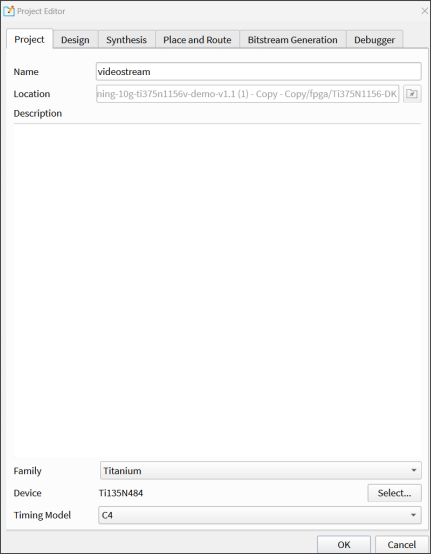
Change Project Device
Use the Efinity Project Editor to change the target device to one of the smaller N484 FPGAs; the Ti135N484 FPGA is shown here for example purposes.
Resource Reassignment
When you change your project to target a different FPGA/package combination, the software tries to migrate the resource assignments. If it cannot migrate the resources automatically, it launches the Migrate Design wizard. This wizard helps you decide how to handle the changes. The following sections show the resource assignment changes you need to make when migrating from larger N484 FPGAs to smaller ones.
GPIO
| Package Pin | Resource | |
|---|---|---|
| Larger N484 FPGA | Smaller N484 FPGA | |
| T16 | GPIOT_N_14 | GPIOT_P_00_CLK26_P |
| T17 | GPIOT_P_29 | GPIOT_P_01_CLK27_P |
| R16 | GPIOT_N_29 | GPIOT_N_01_CLK27_N |
| N17 | GPIOT_P_32 | GPIOT_P_02 |
| N16 | GPIOT_N_32 | GPIOT_N_02 |
| T19 | GPIOT_P_33_CLK16_P | GPIOT_P_22_CLK16_P |
| R18 | GPIOT_N_33_CLK16_N | GPIOT_N_22_CLK16_N |
| R17 | GPIOT_P_34_CLK17_P | GPIOT_P_04_CLK31_P |
| P18 | GPIOT_N_34_CLK17_N | GPIOT_N_04_CLK31_N |
| U22 | GPIOT_P_37_CLK20_P | GPIOT_P_23_CLK17_P |
| T22 | GPIOT_N_37_CLK20_N | GPIOT_N_23_CLK17_N |
| U20 | GPIOT_P_38_CLK21_P | GPIOT_P_24_CLK18_P |
| T21 | GPIOT_N_38_CLK21_N | GPIOT_N_24_CLK18_N |
| T20 | GPIOT_P_39_CLK22_P | GPIOT_P_21 |
| R19 | GPIOT_N_39_CLK22_N | GPIOT_N_21 |
| R21 | GPIOT_P_40_CLK23_P | GPIOT_P_25_CLK19_P |
| R22 | GPIOT_N_40_CLK23_N | GPIOT_N_25_CLK19_N |
| P20 | GPIOT_P_41 | GPIOT_P_17 |
| P21 | GPIOT_N_41 | GPIOT_N_17 |
| P19 | GPIOT_P_43 | GPIOT_P_18 |
| N18 | GPIOT_N_43 | GPIOT_N_18 |
| M18 | GPIOT_P_49_EXTFB | GPIOT_P_19_EXTFB |
| M19 | GPIOT_N_49 | GPIOT_N_19 |
| M17 | GPIOT_P_50_PLLIN0 | GPIOT_P_20_PLLIN0 |
| L17 | GPIOT_N_50 | GPIOT_N_20 |
| K16 | GPIOT_P_57 | GPIOT_P_39_CLK15_P |
| K17 | GPIOT_N_57 | GPIOT_N_39_CLK15_N |
| J17 | GPIOT_P_59_PLLIN0 | GPIOT_P_34_PLLIN0 |
| K18 | GPIOT_N_59 | GPIOT_N_34 |
| L19 | GPIOT_P_62_PLLIN0 | GPIOT_P_37_CDI23_PLLIN0 |
| L20 | GPIOT_N_62 | GPIOT_N_37_CDI22 |
| J19 | GPIOT_P_64_CLK15_P | GPIOT_P_35 |
| K19 | GPIOT_N_64_CLK15_N | GPIOT_N_35 |
| M20 | GPIOR_93_PLLIN1 | GPIOR_78_PLLIN1 |
| N20 | GPIOR_94 | GPIOR_79 |
| N21 | GPIOR_95_CLK12 | GPIOR_80_CLK12 |
| N22 | GPIOR_96_CLK13 | GPIOR_81_CLK13 |
| M22 | GPIOR_97 | GPIOR_82 |
| L21 | GPIOR_98 | GPIOR_83 |
| L22 | GPIOR_99 | GPIOR_84 |
| L8 | GPIOR_140_PLLIN1 | GPIOR_130_PLLIN1 |
| K8 | GPIOR_141 | GPIOR_125 |
| M8 | GPIOR_142_CLK8 | GPIOR_127_CLK8 |
| K7 | GPIOR_143_CLK9 | GPIOR_128_CLK9 |
| J6 | GPIOR_144_PERST_Q2_N | GPIOR_131_PERST_Q0_N |
| K6 | GPIOR_145_PLLIN1 | GPIOR_129_PLLIN1 |
| H9 | GPIOR_165_PLLIN1 | GPIOL_32_PLLIN1 |
| H6 | GPIOR_166 | GPIOL_27_CLK25 |
| G6 | GPIOR_167 | GPIOL_28 |
| H7 | GPIOR_168 | GPIOL_31 |
| H8 | GPIOR_169 | GPIOL_33 |
| F5 | GPIOR_170 | GPIOL_34_PLLIN1 |
| F4 | GPIOR_171 | GPIOL_26_CLK24 |
| A2 | GPIOB_N_43_CSI_CLK10_N | GPIOB_N_28_CSI_CLK11_N |
| A3 | GPIOB_P_43_CSO_CLK10_P | GPIOB_P_28_CSO_CLK11_P |
| B1 | GPIOB_N_41 | GPIOB_N_21_CLK7_N |
| B2 | GPIOB_P_41 | GPIOB_P_21_CLK7_P |
| J4 | GPIOB_N_40_CDI0 | GPIOB_N_27_CDI0_CLK10_N |
| J5 | GPIOB_P_40_CDI1_EXTFB | GPIOB_P_27_CDI1_CLK10_P |
| G3 | GPIOB_N_39_CDI2 | GPIOB_N_26_CDI2 |
| G4 | GPIOB_P_39_CCK_PLLIN0 | GPIOB_P_26_CCK |
| C1 | GPIOB_N_38_SSL_N | GPIOB_N_25_SSL_N |
| C2 | GPIOB_P_38_CDI3 | GPIOB_P_25_CDI3_PLLIN0 |
| F2 | GPIOB_N_37_CDI4 | GPIOB_N_24_CDI4 |
| F3 | GPIOB_P_37_CDI5 | GPIOB_P_24_CDI5_EXTFB |
| D2 | GPIOB_N_36_CDI6 | GPIOB_N_23_CDI6 |
| E2 | GPIOB_P_36_CDI7 | GPIOB_P_23_CDI7_PLLIN0 |
| F1 | GPIOB_N_30_CDI8 | GPIOB_N_22 |
| E1 | GPIOB_P_30_CDI9_PLLIN0 | GPIOB_P_22_EXTFB |
| J3 | GPIOB_N_29_CDI10 | GPIOB_N_16_CDI8_CLK3_N |
| H3 | GPIOB_P_29_CDI11_EXTFB | GPIOB_P_16_CDI9_CLK3_P |
| L4 | GPIOB_N_26_SSU_N | GPIOB_N_20_SSU_N_CLK6_N |
| K4 | GPIOB_P_26_EXTSPICLK | GPIOB_P_20_EXTSPICLK_CLK6_P |
| H2 | GPIOB_N_25_CDI12 | GPIOB_N_18_CLK5_N |
| G2 | GPIOB_P_25_CDI13 | GPIOB_P_18_CLK5_P |
| K3 | GPIOB_N_24_CDI14 | GPIOB_N_08 |
| K2 | GPIOB_P_24_CDI15 | GPIOB_P_08 |
| J1 | GPIOB_N_23_CBSEL0 | GPIOB_N_19_CBSEL0 |
| H1 | GPIOB_P_23_CBSEL1 | GPIOB_P_19_CBSEL1 |
| M5 | GPIOB_N_20_CLK7_N | GPIOB_N_09 |
| L5 | GPIOB_P_20_CLK7_P | GPIOB_P_09 |
| L7 | GPIOB_N_19_TEST_N_CLK6_N | GPIOB_N_17_TEST_N_CLK4_N |
| L6 | GPIOB_P_19_NSTATUS_CLK6_P | GPIOB_P_17_NSTATUS_CLK4_P |
| M3 | GPIOB_N_15_CDI16_CLK2_N | GPIOB_N_15_CDI10_CLK2_N |
| M4 | GPIOB_P_15_CDI17_CLK2_P | GPIOB_P_15_CDI11_CLK2_P |
| R4 | GPIOB_N_14_CDI18_CLK1_N | GPIOB_N_14_CLK1_N |
| P5 | GPIOB_P_14_CDI19_CLK1_P | GPIOB_P_14_CLK1_P |
| L1 | GPIOB_N_13_CDI20_CLK0_N | GPIOB_N_13_CLK0_N |
| K1 | GPIOB_P_13_CDI21_CLK0_P | GPIOB_P_13_CLK0_P |
| N2 | GPIOB_N_12 | GPIOB_N_12_CDI12 |
| N3 | GPIOB_P_12 | GPIOB_P_12_CDI13 |
| N5 | GPIOB_N_09 | GPIOB_N_11_CDI14 |
| N6 | GPIOB_P_09 | GPIOB_P_11_CDI15 |
| P6 | GPIOB_N_08 | GPIOB_N_00 |
| N7 | GPIOB_P_08_CDI22_EXTFB | GPIOB_P_00_PLLIN0 |
| M2 | GPIOB_N_07_CDI23 | GPIOB_N_06_CDI18 |
| L2 | GPIOB_P_07_CDI24_PLLIN0 | GPIOB_P_06_PLLIN0 |
| T6 | GPIOB_N_06_CDI25 | GPIOB_N_07 |
| R6 | GPIOB_P_06_CDI26_EXTFB | GPIOB_P_07_EXTFB |
| P3 | GPIOB_N_05_CDI27 | GPIOB_N_05 |
| P4 | GPIOB_P_05_CDI28_PLLIN0 | GPIOB_P_05 |
| P1 | GPIOB_N_04_CDI29 | GPIOB_N_04 |
| N1 | GPIOB_P_04_CDI30_EXTFB | GPIOB_P_04_EXTFB |
| R2 | GPIOB_N_03_CDI31 | GPIOB_N_03 |
| R3 | GPIOB_P_03_PLLIN0 | GPIOB_P_03_PLLIN0 |
LVDS/SLVS and MIPI Lane
| Package Pin | Resource | |
|---|---|---|
| Larger N484 FPGA | Smaller N484 FPGA | |
| T17 | GPIOT_PN_29 | GPIOT_PN_01 |
| R16 | ||
| N17 | GPIOT_PN_32 | GPIOT_PN_02 |
| N16 | ||
| T19 | GPIOT_PN_33 | GPIOT_PN_22 |
| R18 | ||
| R17 | GPIOT_PN_34 | GPIOT_PN_04 |
| P18 | ||
| U22 | GPIOT_PN_37 | GPIOT_PN_23 |
| T22 | ||
| U20 | GPIOT_PN_38 | GPIOT_PN_24 |
| T21 | ||
| T20 | GPIOT_PN_39 | GPIOT_PN_21 |
| R19 | ||
| R21 | GPIOT_PN_40 | GPIOT_PN_25 |
| R22 | ||
| P20 | GPIOT_PN_41 | GPIOT_PN_17 |
| P21 | ||
| P19 | GPIOT_PN_43 | GPIOT_PN_18 |
| N18 | ||
| M18 | GPIOT_PN_49 | GPIOT_PN_19 |
| M19 | ||
| M17 | GPIOT_PN_50 | GPIOT_PN_20 |
| L17 | ||
| K16 | GPIOT_PN_57 | GPIOT_PN_39 |
| K17 | ||
| J17 | GPIOT_PN_59 | GPIOT_PN_34 |
| K18 | ||
| L19 | GPIOT_PN_62 | GPIOT_PN_37 |
| L20 | ||
| J19 | GPIOT_PN_64 | GPIOT_PN_35 |
| K19 | ||
| A2 | GPIOB_PN_43 | GPIOB_PN_28 |
| A3 | ||
| B1 | GPIOB_PN_41 | GPIOB_PN_21 |
| B2 | ||
| J4 | GPIOB_PN_40 | GPIOB_PN_27 |
| J5 | ||
| G3 | GPIOB_PN_39 | GPIOB_PN_26 |
| G4 | ||
| C1 | GPIOB_PN_38 | GPIOB_PN_25 |
| C2 | ||
| F2 | GPIOB_PN_37 | GPIOB_PN_24 |
| F3 | ||
| D2 | GPIOB_PN_36 | GPIOB_PN_23 |
| E2 | ||
| F1 | GPIOB_PN_30 | GPIOB_PN_22 |
| E1 | ||
| J3 | GPIOB_PN_29 | GPIOB_PN_16 |
| H3 | ||
| L4 | GPIOB_PN_26 | GPIOB_PN_20 |
| K4 | ||
| H2 | GPIOB_PN_25 | GPIOB_PN_18 |
| G2 | ||
| K3 | GPIOB_PN_24 | GPIOB_PN_08 |
| K2 | ||
| J1 | GPIOB_PN_23 | GPIOB_PN_19 |
| H1 | ||
| M5 | GPIOB_PN_20 | GPIOB_PN_09 |
| L5 | ||
| L7 | GPIOB_PN_19 | GPIOB_PN_17 |
| L6 | ||
| M3 | GPIOB_PN_15 | GPIOB_PN_15 |
| M4 | ||
| R4 | GPIOB_PN_14 | GPIOB_PN_14 |
| P5 | ||
| L1 | GPIOB_PN_13 | GPIOB_PN_13 |
| K1 | ||
| N2 | GPIOB_PN_12 | GPIOB_PN_12 |
| N3 | ||
| N5 | GPIOB_PN_09 | GPIOB_PN_11 |
| N6 | ||
| P6 | GPIOB_PN_08 | GPIOB_PN_00 |
| N7 | ||
| M2 | GPIOB_PN_07 | GPIOB_PN_06 |
| L2 | ||
| T6 | GPIOB_PN_06 | GPIOB_PN_07 |
| R6 | ||
| P3 | GPIOB_PN_05 | GPIOB_PN_05 |
| P4 | ||
| P1 | GPIOB_PN_04 | GPIOB_PN_04 |
| N1 | ||
| R2 | GPIOB_PN_03 | GPIOB_PN_03 |
| R3 | ||
PLL
MIPI DPHY TX
| MIPI TX Resource | |
|---|---|
| Smaller N484 FPGA | Larger N484 FPGA |
| MIPI_TX1 | MIPI_TX2 |
MIPI DPHY RX
| MIPI RX Resource | |
|---|---|
| Smaller N484 FPGA | Larger N484 FPGA |
| MIPI_RX1 | MIPI_RX2 |
DDR
| DDR Resource | |
|---|---|
| Smaller N484 FPGA | Larger N484 FPGA |
| DDR_0 | DDR_0 |
PLL SSC
| PLL SSC Resource | |
|---|---|
| Smaller N484 FPGA | Larger N484 FPGA |
| MIPI_TX1 | MIPI_TX2 |
PCI Express
| PCI Express Resource | |
|---|---|
| Smaller N484 FPGA | Larger N484 FPGA |
| QUAD_0 | QUAD_2 |
Ethernet XGMII
| Ethernet XGMII Resource | |
|---|---|
| Smaller N484 FPGA | Larger N484 FPGA |
| Q0_LN0 | Q2_LN0 |
| Q0_LN1 | Q2_LN1 |
| Q0_LN2 | Q2_LN2 |
| Q0_LN3 | Q2_LN3 |
| Q1_LN0 | Q3_LN0 |
| Q1_LN1 | Q3_LN1 |
| Q1_LN2 | Q3_LN2 |
| Q1_LN3 | Q3_LN3 |
PMA Direct
| PMA Direct Resource | |
|---|---|
| Smaller N484 FPGA | Larger N484 FPGA |
| Q0_LN0 | Q2_LN0 |
| Q0_LN1 | Q2_LN1 |
| Q0_LN2 | Q2_LN2 |
| Q0_LN3 | Q2_LN3 |
| Q1_LN0 | Q3_LN0 |
| Q1_LN1 | Q3_LN1 |
| Q1_LN2 | Q3_LN2 |
| Q1_LN3 | Q3_LN3 |
Revision History
| Date | Version | Description |
|---|---|---|
| November 2025 | 1.3 | Expanded coverage to all Titanium and Topaz devices with N484 packages. (DOC-2774) |
| May 2025 | 1.2 | Added Incompatible Pin Functions. (DOC-2519) Updated
Migratable Resources. (DOC-2519) |
| March 2025 | 1.1 | Fix typo MIPI DPHY TX. (DOC-2450) Fix typo MIPI DPHY RX. (DOC-2450) Fix typo PLL SSC.
(DOC-2450) Fix typo PCI Express.
(DOC-2450) Fix typo Ethernet XGMII.
(DOC-2450) Fix typo PMA Direct.
(DOC-2450) |
| February 2025 | 1.0 | Initial release. |