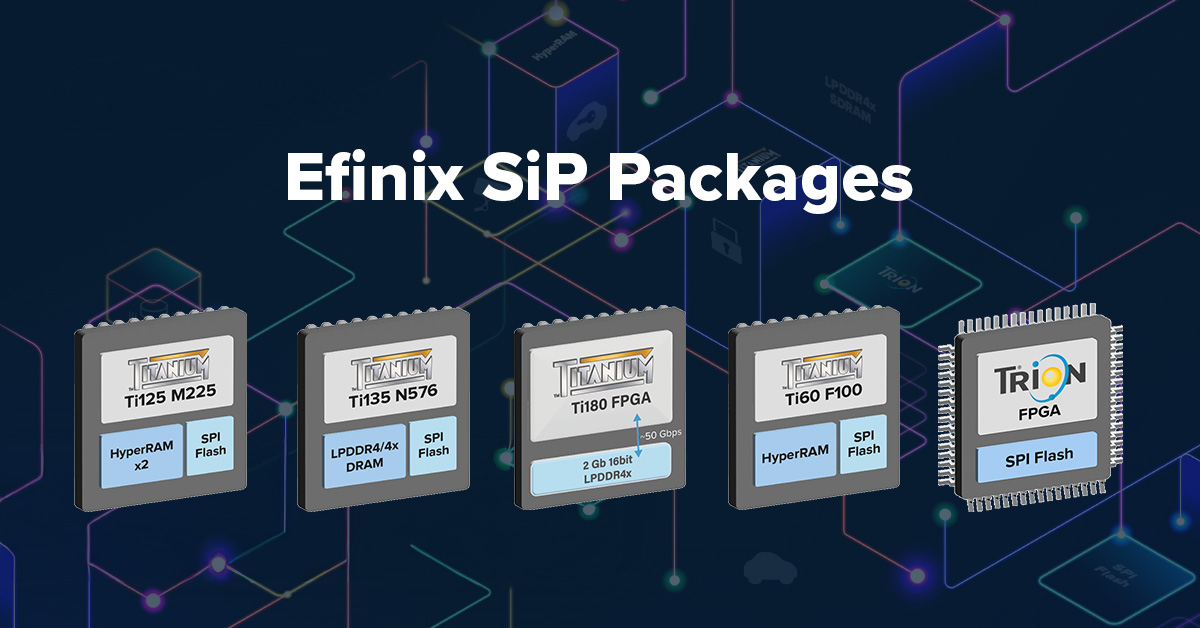
1. What is a SIP device, and how does it simplify system design?
A SiP brings multiple ICs like the FPGA and memory into a single package. It simplifies design by removing the need to handle complex interfaces like DDR at the board level, so a lot of that integration work is already done. This helps reduce board complexity, saves space, and gives a more ready-to-use starting point for their design.
2. When does a SiP provide the most value in a real-world application?
It is especially valuable when working with DDR4, where layout and timing can be challenging. With a SiP, the memory interface is already tested and known good, so it can be dropped into the design without worrying about bring-up issues or board re-spins. This is beneficial for compact designs that need reliable memory performance without adding extra board-level work.
3. How does SiP integration help accelerate time-to-market?
There is less work involved with fewer components, less routing, and less validation overall. Without needing to debug memory interfaces, development can move faster from design to production. This allows teams to move through prototyping with fewer hardware delays.
4. What types of applications benefit most from SiP-based solutions?
Applications that need a small, integrated, and low-power solution benefit most. Common examples include cameras, embedded vision systems, and IoT devices. These systems often need memory processing, and flexible I/O in a compact form factor.

Camera
IoT devices
5. Where do teams typically see the biggest efficiency gains?
A big area is BOM management. With fewer components, there’s less sourcing, qualification, and overall system complexity to manage. Teams can also save time on PCB layout and validation because fewer external memory connections need to be routed.
6. How does using a SiP influence overall system architecture?
It frees up I/O pins since the DDR interface is not routed externally. That gives more flexibility when designing the rest of the system. It also helps reduce routing congestion and makes the board architecture cleaner.
7. What successful use cases have you seen for SiP-based designs?
Designs that require DDR but need to stay compact and power efficient are strong use cases. Cameras and other embedded systems are common examples. SiP helps support memory needs without adding extra board complexity which benefits space-constrained designs.
8. What kind of DDR performance and availability can be expected at Efinix?
It depends on the device, but performance is typically around 3000 MT/s on a 16-bit interface. Because the DDR is integrated inside the SiP, the high-speed routing between the FPGA and memory is done inside the SiP package. This reduces PCB routing complexity and congestion which makes it easier to route other signals on the board.
9. How is pricing typically handled for SiP devices?
Pricing depends on the specific device and configuration. The Efinix team can help review the design requirements, memory needs, and target application to recommend the best SiP option. For more details, please contact the Efinix sales team.