Arbitration Mode
The APB Interconnect core supports two
arbitration mode:
- Fixed-Priority—All enabled masters are granted the request based on the
user-defined master priority in descending order. During the
EVALUATIONstate, i.e., whenapb_eval=1, the APB Interconnect core evaluates all enabled masters'PSELto decide which master is to be granted access. The master with Priority 1 gets the highest priority. Upon completing the requested APB transfer, if the same master with Priority 1 maintains its assertion ofPSEL, it retains the priority. It is granted request every time it assertsPENABLEat one clock cycle afterPSEL. - Round-Robin—Each master has the same rational order and takes turns to be
granted requests in ascending order of their master numbering. For example, in
the event of 3 masters,
Master_0is granted the request first, followed byMaster_1andMaster_2. Then, the sequence restarts withMaster_0.
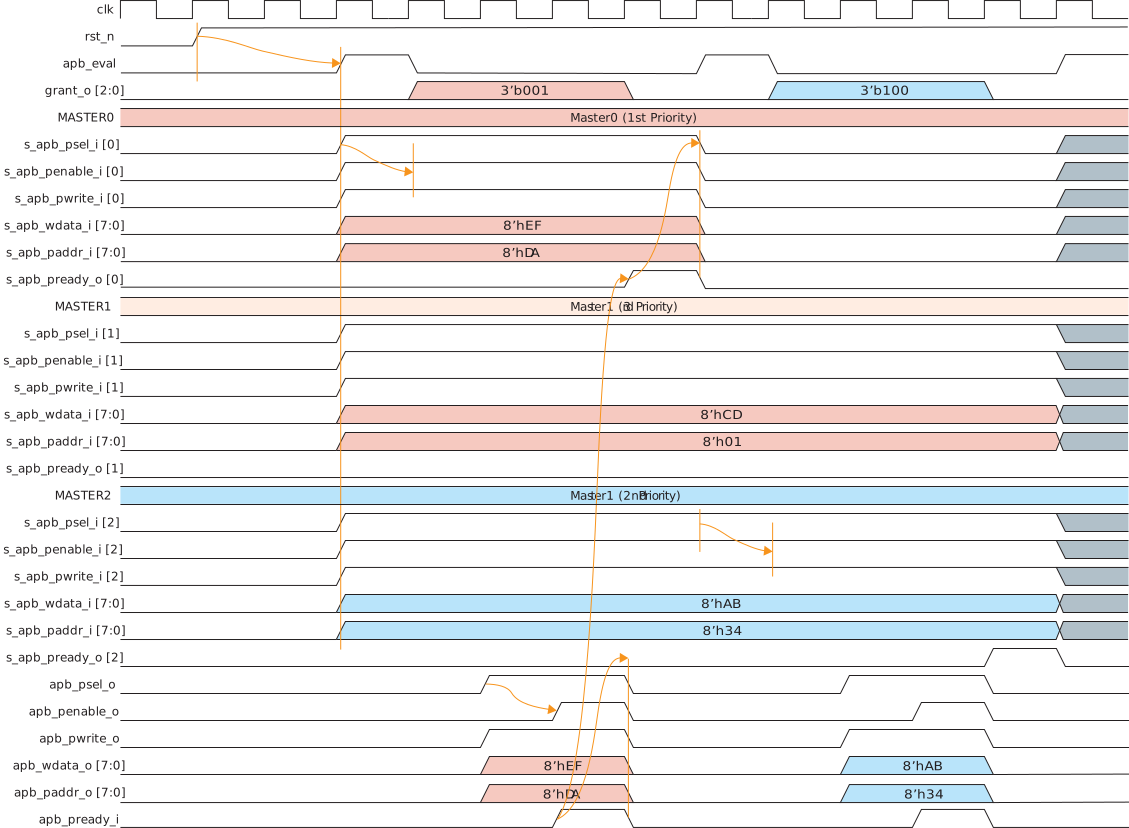
In Fixed-Priority mode, transfer access is granted to the master
with the highest priority and request (PSEL) signal.
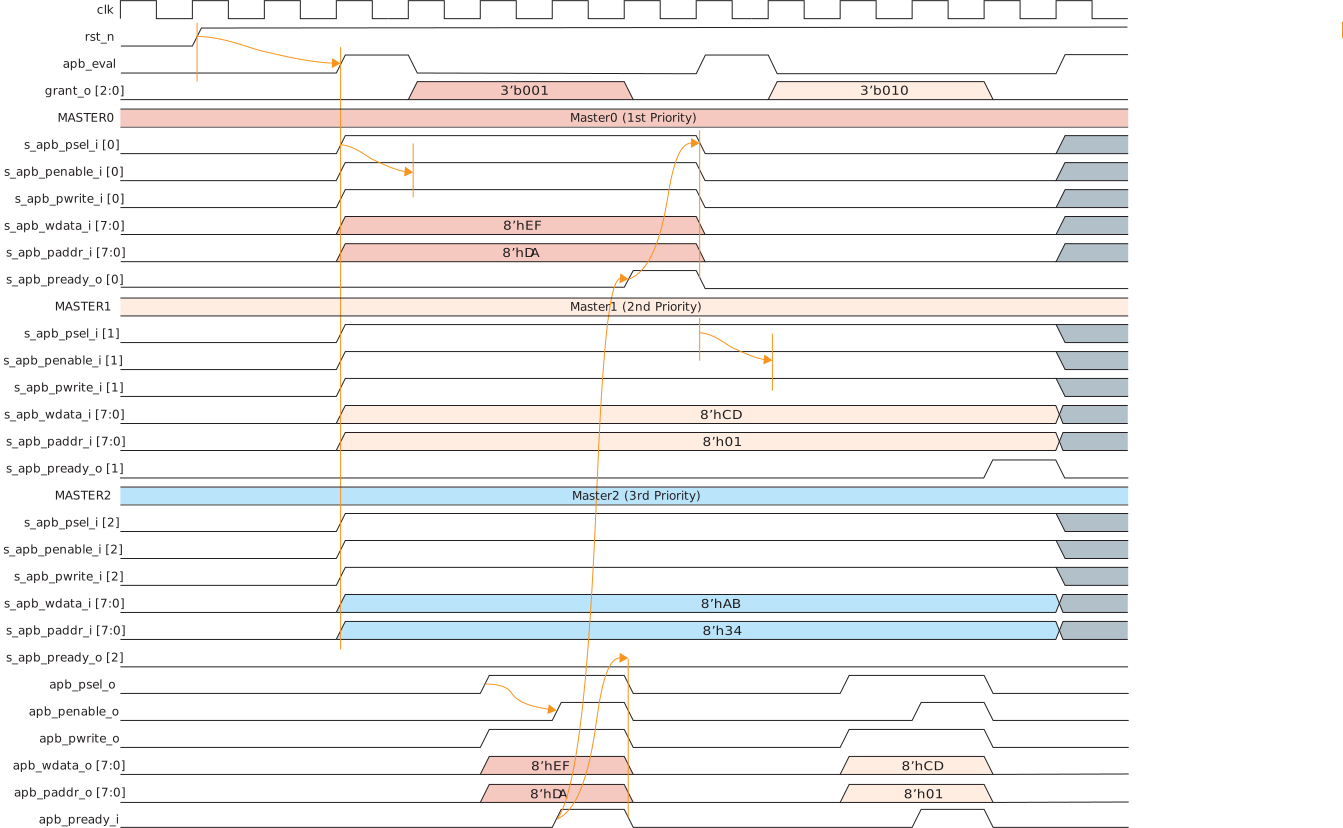
For Round-Robin mode, see Figure 2. When all
enabled masters are requesting, i.e., all s_apb_psel_i are asserted,
every master is granted request one by one starting with Master_0, followed by Master_1,
and Master_2.

If the master is not requesting upon its turn, the APB Interconnect core skips that master and grants access to the next requested master. However, the next requested master is served twice since it takes the previous master’s turn and serves its real turn.