Newsroom > Blog
November 11, 2026
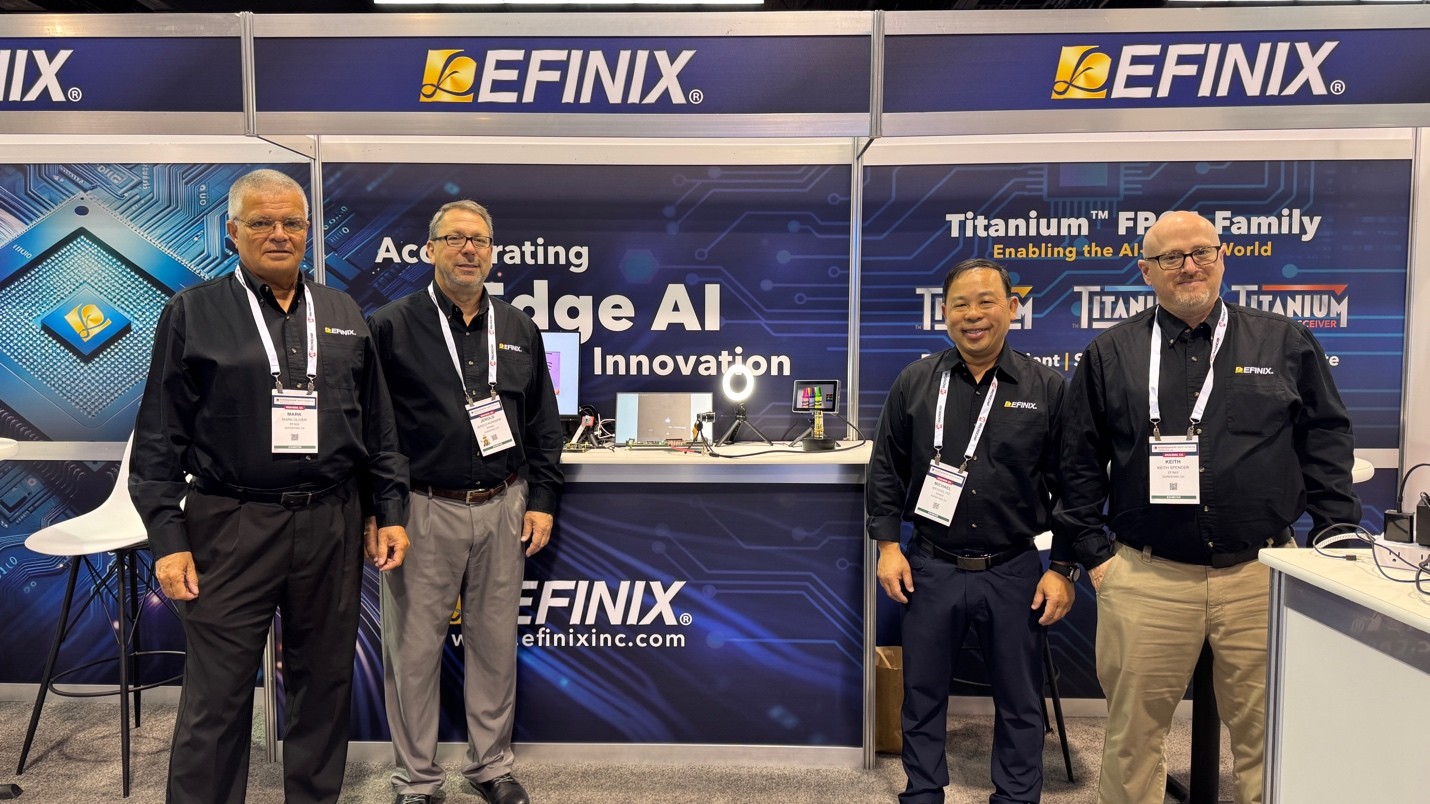
Efinix attended embedded world North America 2026, held September 22–24 at the Anaheim Convention Center in Anaheim, California. Efinix showcased its FPGA solutions for edge AI and embedded vision, including segmentation and super-resolution demos. Below is a Q&A with the Efinix team sharing highlights from the show.
Both the segmentation and super-resolution demos received a lot of attention. Attendees were especially interested in how these technologies could be used for real-time image processing and AI applications. The demos also helped show what is possible with FPGA-based processing in compact, low-power devices.
We saw a lot of interest in vision systems, sensors, and bringing more intelligence to the edge. Customers were also looking for high performance in smaller devices without increasing power consumption. Many were exploring ways to add more processing capabilities directly into their products.
There were many software developers, OS providers, IP vendors, and startups at the show. Software support seemed to be a big focus, along with growing interest in robotics and how FPGAs can fit into those applications. It was clear that users are looking for hardware and software solutions that work well together.
We received positive feedback on our development tools, software support, and low power consumption. Customers liked having the flexibility to develop their applications while keeping power requirements low.
Edge AI was definitely one of the biggest topics at the show. Almost everyone was talking about AI in some way, especially how to bring more processing and intelligence directly into devices.
We spoke with customers working on audio devices, cameras, and control systems. Each application has different requirements, but performance, power consumption, and flexibility were common priorities.
We had conversations with people from all kinds of industries, including medical. It was interesting to see the different applications people were working on and where they saw opportunities to use FPGAs.
A big takeaway was that customers want to do more with less space and power. Many are trying to achieve things they could not do before, whether because of size, power, or performance limitations.