Tz170 Spread-Spectrum Clocking PLL
The Tz170 MIPI D-PHY interface includes a spread-spectrum clocking (SSC) PLL that spreads or varies the signal spectrum around the ideal clock frequency. If you are not using the MIPI D-PHY TX interface for MIPI signals, you can use the SSC PLL as another clock source.
The PLL consists of a pre-divider counter (N counter), a feedback multiplier counter (M counter), a post-divider counter (O counter), and output divider (C). You cannot modify the counter settings. Instead, you specify the output frequency you want and the reference clock frequency. If the SSC PLL cannot exactly match the output frequency, it displays (and uses) the frequency that is closest to your setting.
By default, the SSC PLL acts as a regular PLL. You enable the spread-spectrum clocking by turning on the Enable Spread Spectrum Clock (SSC) option in the Interface Designer.
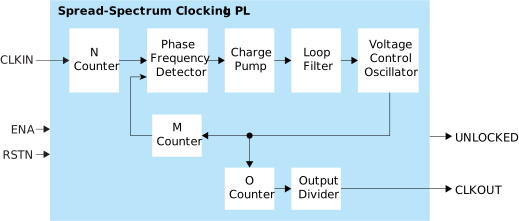
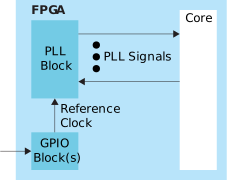
| Signal | Direction | Description |
|---|---|---|
| CLKIN | Input | Reference clocks from core, PLL, or GPIO. |
| CLKOUT | Output | PLL SSC Clock Out Pin Name. |
| RSTN | Input | Active-low PLL SSC reset signal. |
| UNLOCKED | Output | PLL Unlock State Pin Name. Goes high when PLL SSC is in unlock state. Connect this signal in your design to monitor the lock status. |
| ENA | Input | (Optional) PLL SSC Enable Pin Name: Always enable:
1 Disable: 0 Can be driven by an active signal
for dynamic enable. |