Differential Pair Skew
For correct DRAM operation, the timing of the DQS and
CK differential pairs is critical. Efinix®
strongly recommends that you match the electrical length between these legs and keep any
differences to less than 1
ps.
Skew between the differential pair lines (intra-pair skew) impacts the monotonicity of
the CK and DQS signals, which are critical to the timing. Skew on
these signals causes signal distortion and increases the bit error rate.
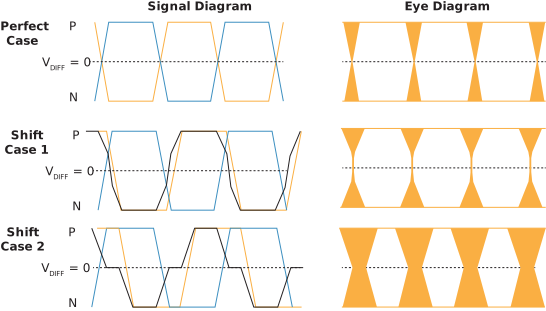
Note: The Topaz™ DDR DRAM controller cannot deskew the differential
signals. The zero crossing of the differential signals can seriously impact timing
margins, leading to high jitter, high SNR, and increased sample errors.
| Property | Pin Match | Pin Mismatch |
|---|---|---|
| Length | < ±1% of trace length | > ±1% of trace length |
| Skew | < ±1 ps | > ±1 ps |
| Delay | No skew | Skew |
| Jitter | Low | High |
| Sample error | Low | High |
| SNR | Low | High |
| Distortion | Low | High |